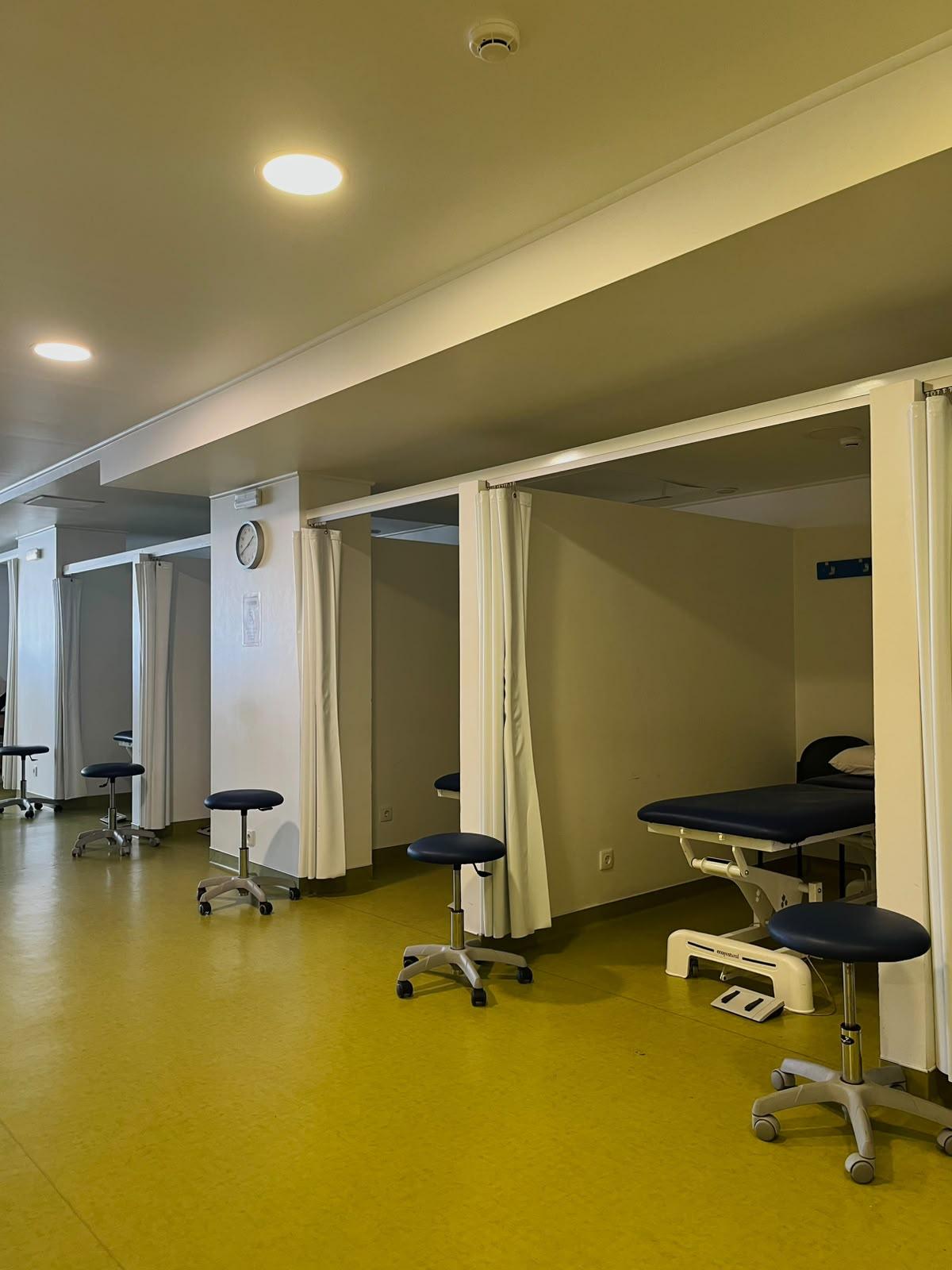
Pelvic physiotherapy for women: problems, postnatal recovery and sessions
Incontinence, prolapse, pelvic pain, the postnatal period and menopause: what the evidence says, when to start and how long it takes.
Answers with figures and public sources, to help you decide. They are no substitute for an appointment: if you have a specific concern, speak to a health professional.
What problems does pelvic physiotherapy treat in women?
Short answer. It treats urine leakage (when coughing, sneezing, running or with urgency), a feeling of heaviness in the vagina due to prolapse, pelvic pain and pain during sex, constipation and leakage of wind or faeces. It also provides support during pregnancy, recovery after childbirth, including abdominal separation (diastasis), and the changes of the menopause. Around half of adult women have some degree of urinary incontinence: it is common, but it is not something you have to live with.
How many women are affected
Around 50% of adult women have some degree of urinary incontinence, and symptomatic prolapse affects 5% to 10%.
The evidence is strong
In a 2018 Cochrane review (31 trials, 1817 women), pelvic floor muscle training cured stress incontinence in 56% of women, compared with 6% without treatment (high certainty). Counting cure and improvement together, 74% compared with 11%.
Prolapse
The NHS describes a feeling of heaviness, of a «lump» or of something coming down in the vagina, and pain or numbness during sex. It is more common after the menopause, and first-line treatment includes pelvic floor training with a physiotherapist specialising in women's health.
Abdominal separation (diastasis)
During pregnancy, the rectus abdominis muscles move apart, usually by about two finger-widths, and tend to return to normal by 8 weeks after the birth. If the gap is still obvious, speak to your doctor.
On the SNS
There are pelvic floor, birth preparation and postnatal recovery consultations in SNS (Portugal's National Health Service) physical medicine and rehabilitation departments, by referral and with waiting times.
What an appointment is usually like
A detailed conversation, a postural and abdominal assessment and, only with your consent, an internal assessment of the muscles. You can always decline or ask to postpone that part.
After a vaginal birth or a caesarean, when can I start?
Short answer. Gentle pelvic floor exercises can start in the first few days, whatever the type of birth, as long as you are already passing urine normally. The postnatal check is at around 6 to 8 weeks, and that is a good time for a pelvic physiotherapy assessment. If you have urine leakage, a feeling of heaviness or pain before then, you do not need to wait. See how many times a day to do the exercises.
When to start the exercises
An NHS leaflet (Kingston and Richmond) recommends restarting pelvic floor exercises «as soon as possible after the birth, whatever the type of delivery»; with a catheter, after it has been removed and you are passing urine normally. The suggested dose is 3 to 5 times a day, up to 10 repetitions of slow and fast contractions.
The 6 to 8 week check
The NHS points to the postnatal check at 6 to 8 weeks, and to seeking help at any time if urine leakage is bothering you.
And after a caesarean?
The pelvic floor has also been affected by the pregnancy. Urine leakage is less common after a caesarean (around 15%) than after a vaginal birth (around 31%), but it does not go away entirely. The scar and abdominal effort call for care in the first few weeks.
Signs not to wait on
- urine leakage that is not improving;
- a feeling of heaviness or of a «lump» in the vagina;
- pain during sex, once you resume it;
- abdominal separation still obvious at 8 weeks.
Before returning to running or intense training, it is common to wait at least for the 6 to 8 week check and an assessment; there is no single timeframe from an official source.
Is leaking urine when coughing, sneezing or running after having a baby something to accept?
Short answer. It is common, but it is not something to accept. Around one in three women has urine leakage in the first year after giving birth, nearly always on exertion. Pelvic floor muscle training, when properly taught, cures stress incontinence in more than half of women (56%, compared with 6% without treatment). An assessment tells you whether you are doing the exercises correctly.
How common it is
A review of 24 studies with 35 064 women (2021) found urine leakage in 31% of women between 6 weeks and the first year after giving birth, and in around 32% after one year. In 54% of cases it was stress incontinence: when coughing, sneezing, jumping or running.
Treatment
Pelvic floor training cures stress incontinence in 56% of women, compared with 6% without treatment (Cochrane, 2018, high certainty). The NHS recommends at least 8 contractions, 3 times a day, for at least 3 months.
Common mistakes
- tightening the tummy or buttocks instead of the pelvic floor;
- holding your breath during the contraction;
- stopping the exercises after just a few weeks.
When to see a doctor
Blood in the urine, burning, fever, continuous leakage, or incontinence that comes on suddenly for no apparent reason.
How many pelvic physiotherapy sessions are usually needed?
Short answer. Pelvic floor training needs at least 3 months to work, with daily exercises at home and follow-up sessions along the way; in practice this is often 6 to 12 sessions, closer together at the start. On the Cascais line and in Lisbon, a session usually costs between €50 and €60, and the first appointment between €55 and €65. To find out the price at Clínica de Exercício, call 21 828 4467 (call to a national landline).
How long
The NHS recommends at least 3 months of pelvic floor training before assessing the result. There is no official number of supervised sessions: programmes tend to have weekly or fortnightly appointments at first, more spaced out later, and most of the work is the daily exercises at home.
Market prices
From public price lists on the Cascais line and in Lisbon, checked in November 2026:
- first appointment: €55 to €65;
- follow-up session: €50 to €60;
- packages of 5 or 10 sessions: around €40 to €44 per session.
As a rule, the invoice counts towards IRS (Portuguese income tax) health expenses. To find out the price at Clínica de Exercício, call 21 828 4467 (call to a national landline).
Sources
- Cochrane — Pelvic floor muscle training for urinary incontinence (Dumoulin et al., 2018)
- NHS — Pelvic organ prolapse
- NHS — Your post-pregnancy body
- NHS — Urinary incontinence: treatment
- Kingston and Richmond NHS — Pelvic floor exercises and perineal health
- Moossdorff-Steinhauser et al., Int Urogynecol J, 2021 (PubMed)
At Clínica de Exercício
These answers are summarised on the pelvic physiotherapy in Estoril page. To book, ask about prices or with any questions, call 21 828 4467 (call to a national landline). See all the frequently asked questions or go back to the home page.