Biomechanical assessment, insoles and foot care
What biomechanical tests measure, what the evidence says about insoles, and when your feet need professional care or a doctor’s appointment.
Answers with figures and public sources, to help you decide. They do not replace an appointment: if you have a specific concern, speak to a health professional.
What is a running analysis with plantar pressures and dynamometry for?
Short answer. Running analysis looks at the way you run, to find factors linked to recurring pain or injuries. Plantar pressures show how weight is distributed across the foot, standing still and walking. Dynamometry measures the strength of each muscle and the differences between sides, one of the criteria for returning to sport after an injury. They are useful for recurring injuries and when returning to training; see why choosing running shoes by foot type does not prevent injuries.
Choosing running shoes by “foot type” does not prevent injuries
- In a study of 927 novice runners, all in neutral shoes for a year (2014), there was no difference in injury risk at 250 km; pronators even had fewer injuries.
- A 2022 Cochrane review (3 trials, 7203 participants) concluded that choosing shoes by foot posture “probably makes little or no difference”.
So the analysis is more valuable for adjusting technique, training load and rehabilitation than for “choosing the right trainers”.
Strength and returning to sport
In a study of 106 people who had anterior cruciate ligament surgery (2016), the criterion for returning to sport was more than 90% symmetry in quadriceps strength and in hop tests. Below 90%, 33% were injured again; above, 12.5%. Each additional point of symmetry lowered the re-injury rate by about 3%, and returning before 9 months led to 39.5% re-injuries, compared with 19.4%.
Plantar pressures
They are used to describe the loads on the foot and to design insoles. No evidence was found that they improve clinical outcomes in themselves: the value lies in how the result is used in treatment or training.
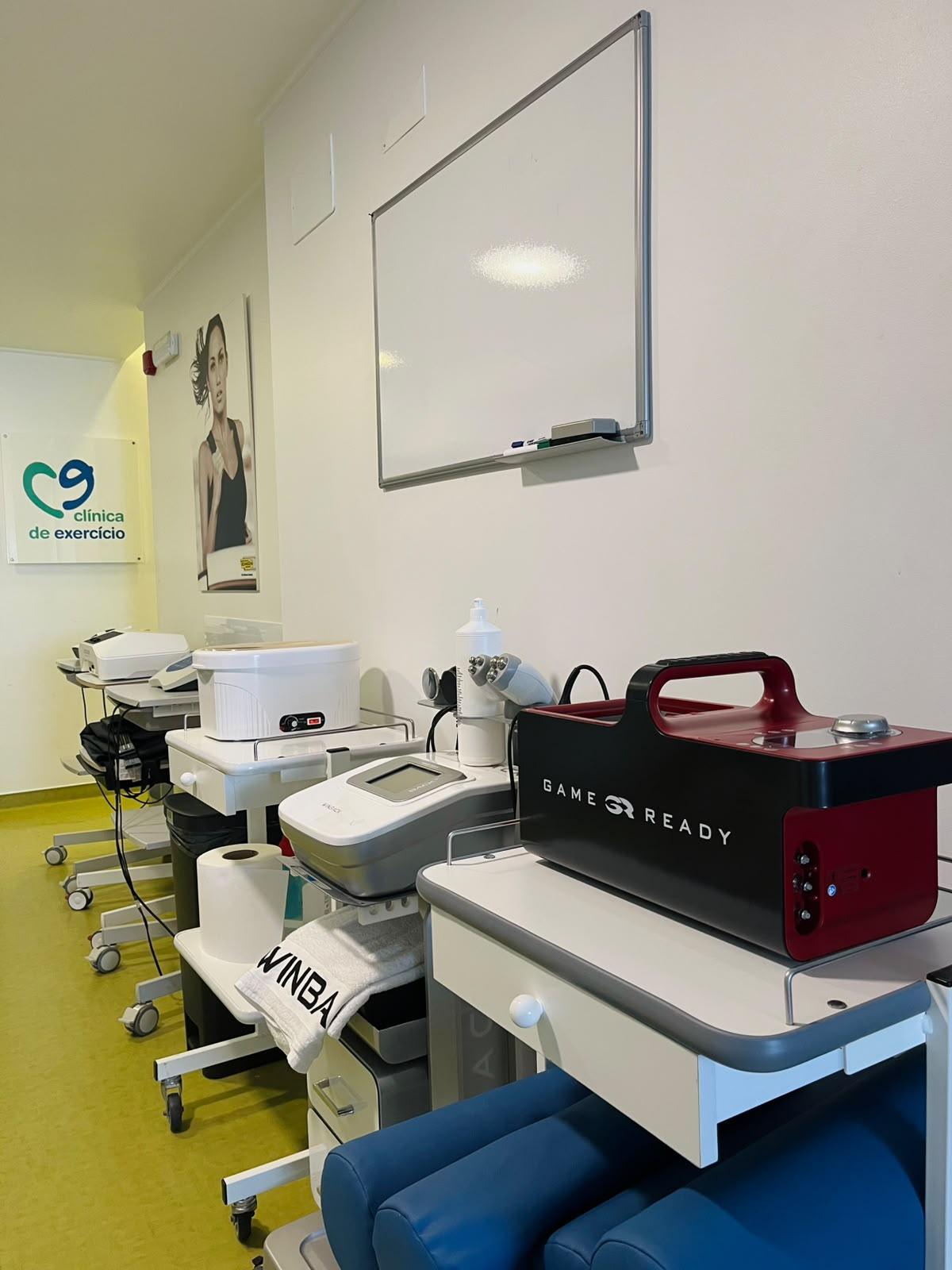
At Clínica de Exercício, the biomechanical assessment combines plantar pressure analysis, running analysis and dynamometry.
When are custom insoles worthwhile?
Short answer. They make most sense when there is a foot problem causing pain or sores: an at-risk diabetic foot, marked deformities, a difference in leg length, or forefoot pain that does not improve with suitable footwear. For plantar fasciitis, studies show that custom insoles are no better than good prefabricated insoles. In Greater Lisbon, custom insoles usually cost between €85 and €105; to find out what orthotics and prosthetics at Clínica de Exercício includes and how much it costs, call 21 828 4467 (call to a national landline).
Plantar fasciitis
- A review of 19 trials with 1660 people (2018): no short-term benefit; in the medium term (7 to 12 weeks), insoles slightly reduce pain compared with placebo insoles; custom and prefabricated insoles, no difference.
- Another review of 20 studies (2018) concluded that insoles are no better than placebo or other conservative treatments.
- The NHS recommends cushioned footwear with good arch support, and seeing a GP if it does not improve within 2 weeks, if there is tingling or loss of sensation, or if you have diabetes.
Diabetic foot
DGS Standard no. 005/2011 includes the orthotics technician in the level III diabetic foot team: suitable footwear and orthoses are part of ulcer prevention.
Who makes them
The orthotics and prosthetics technician is a diagnostic and therapeutic profession that assesses motor or postural problems in order to “conceive, design and fit the necessary devices” (Decree-Law no. 564/99). Podiatrists also prescribe and make insoles.
Market price
In Greater Lisbon, custom insoles cost from €60 to €160, most between €85 and €105. To find out what orthotics and prosthetics at Clínica de Exercício includes and how much it costs, call 21 828 4467 (call to a national landline).
Ingrown toenail or corns: when to have your feet treated at a clinic and when to see a doctor?
Short answer. Corns, calluses and thickened or ingrown nails without infection respond well to professional foot care; do not cut them at home. See a doctor if there is pus, spreading redness, fever, or if it does not improve within 2 to 3 weeks. If you have diabetes or poor circulation, do not treat your feet yourself and have your feet checked at least once a year, as the DGS standard for the diabetic foot requires.
Ingrown toenail
The NHS says to see a GP if there is pus, fever or chills, if home care does not work, or if you have diabetes. In some cases part of the nail needs to be removed, under local anaesthetic, as a medical procedure.
Corns and calluses
The NHS says “do not cut corns or calluses yourself” and advises against self-treatment for people with diabetes, circulation problems or weakened immunity. See a GP if they bleed, have pus or do not improve within 3 weeks.
Diabetic foot: the DGS standard
- everyone with diabetes should have their feet assessed once a year;
- medium risk (neuropathy): every 6 months;
- high risk (ischaemia, deformity, previous ulcer or amputation): every 1 to 3 months.
About 70% of non-traumatic amputations are due to diabetic foot.
Who can care for feet in Portugal
Podiatry is a regulated profession (Law no. 65/2014), with a degree and a title issued by the ACSS. The Ordem dos Enfermeiros (nursing regulator) includes diabetic foot care among nursing care. At Clínica de Exercício, podiatry means nursing care dedicated to foot health.
Market price
In Lisbon and Oeiras, a first foot care appointment usually costs between €40 and €65. To find out the price at Clínica de Exercício, call 21 828 4467 (call to a national landline).
Sources
- Nielsen et al., Br J Sports Med, 2014 (PubMed)
- Cochrane — Running shoes and injury prevention (2022)
- Grindem et al., Br J Sports Med, 2016 (PMC)
- Whittaker et al., Br J Sports Med, 2018 (PubMed)
- NHS — Plantar fasciitis
- DGS — Norma n.º 005/2011, diagnóstico sistemático do pé diabético (systematic diagnosis of the diabetic foot)
- NHS — Ingrown toenail
- NHS — Corns and calluses
- Ordem dos Enfermeiros — cuidados de enfermagem nas farmácias (nursing care in pharmacies)
At Clínica de Exercício
These answers are summarised on the biomechanical assessment, orthotics and podiatry in Estoril, orthotics and prosthetics in Estoril and podiatry in Estoril pages. To book, ask about prices or with any questions, call 21 828 4467 (call to a national landline). See all the frequently asked questions or go back to the home page.