RPG (Global Postural Reeducation) in Estoril
Specific postures and progressive stretching for posture, mobility and pain.
What is RPG
Global Postural Reeducation (RPG) is a therapeutic approach that aims to improve posture, mobility and muscle balance through specific postures and progressive stretching. It is used in managing postural problems and certain musculoskeletal conditions, helping to improve function and reduce pain.
The method was created by the French physiotherapist Philippe Souchard. It is based on the idea that muscles work in chains: tension in one place can show up in another. So, instead of stretching a single muscle, it works on several chains at the same time.
Who it is for
RPG is used in managing postural problems and some musculoskeletal conditions. For example: back or neck pain linked to posture, spinal curvatures, generalised stiffness or imbalances that keep returning to the same place.
What happens in a session
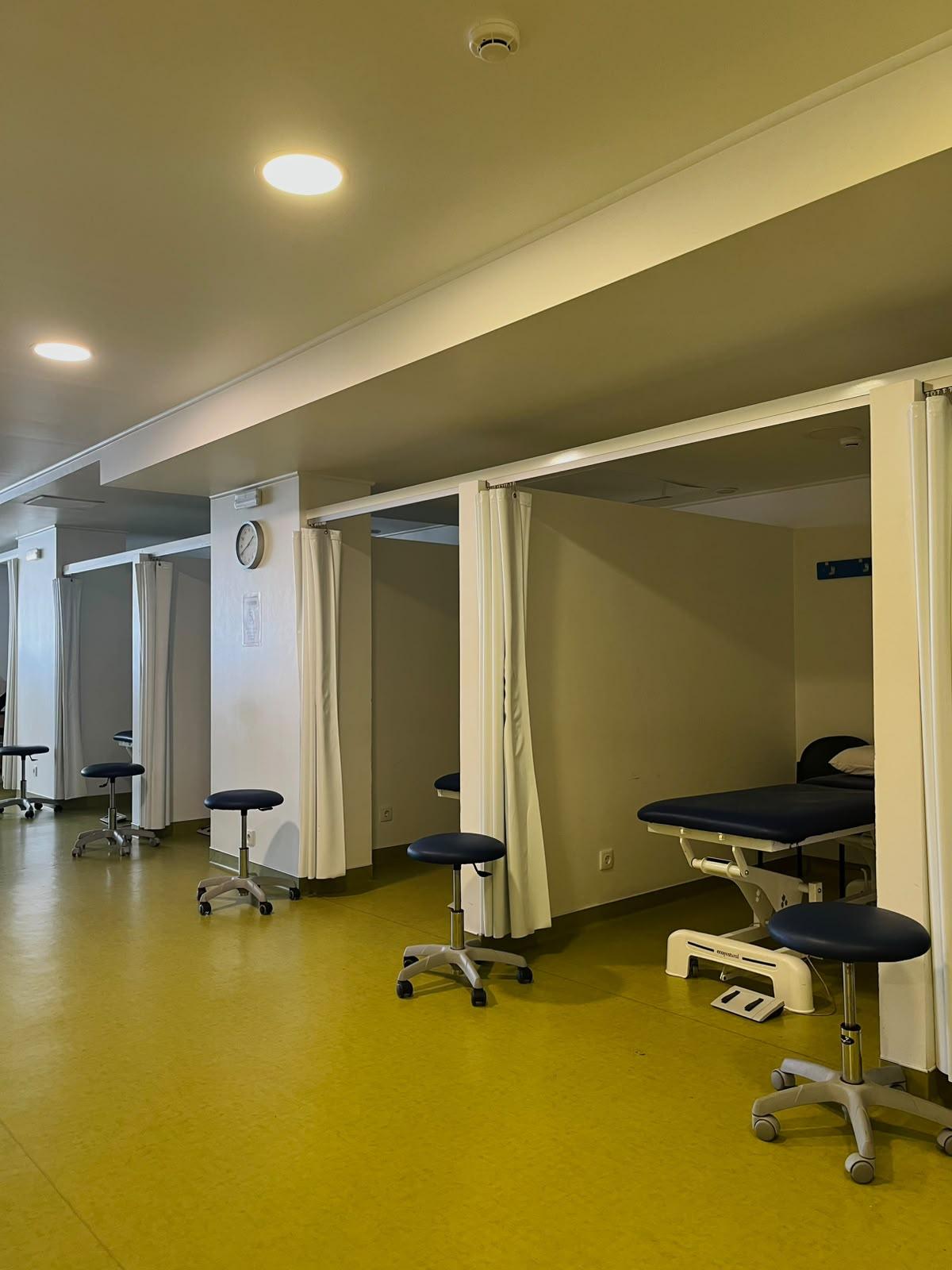
In RPG, sessions are usually one-to-one. The physiotherapist places you in specific postures, lying, sitting or standing, and holds them for a few minutes, with progressive stretching and breathing control. It requires concentration, but it should not hurt. Over the sessions, the postures change as the body responds.
RPG at Clínica de Exercício
In our team, Rafael Costa and Liliane Toga are trained in Global Postural Reeducation using the Philippe Souchard method (see the profiles of Rafael Costa and Liliane Toga). See all physiotherapy and clinical Pilates services in Estoril or go back to the home page.
Frequently asked questions
Short answers, with numbers and sources. There is more in all frequently asked questions.
What is RPG and when is it recommended?
Global Postural Reeducation is a physiotherapy method created by Philippe Souchard in 1981. It uses postures held for several minutes, with controlled breathing, to stretch chains of muscles, and it is mainly used for lower back and neck pain, postural problems and stiffness. In studies, there is usually one session a week for about 10 weeks: it reduces pain, but it is not better than other exercise (see the comparison with clinical Pilates).